Happy Independence Day
Showing posts with label India. Show all posts
Showing posts with label India. Show all posts
Saturday, August 15, 2009


Saturday, May 16, 2009
Old is New Government of India

714 million eligible voter and close to 100 million people for the first time and 5500+ politicians from over more than 1000 political parties fight for for 543 parliamentary seats. Election was staggered in five stages and the results announced today.
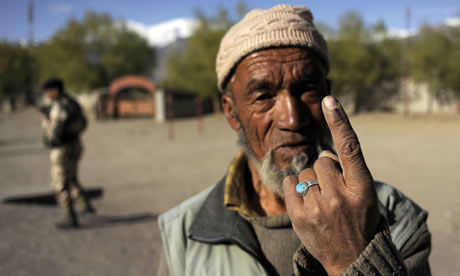

The national security, economy and local issues had influenced the votes and People have spoken in support of ruling Mr.Singh's government. Its very Impressive victory considering many crisis this governtment has to face.
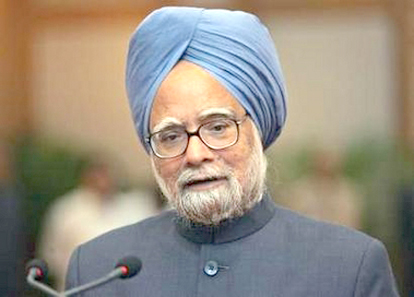
Congurlations to Mr.Manmohan Singh Government.
more details: http://news.bbc.co.uk/2/hi/south_asia/8050612.stm
Wednesday, December 03, 2008
Why not a Political Startup but how?
Very interesting post on Venturewood -> Why Not A Political Startup.
My comments:
One more supporting hand for the idea. I was reading somewhere that--its time for silent majority act & react (middle-class and non-farmers,..) but how,why,what,who,where,.. is the question(s)!
Few suggestions/questions/cautions:
- Objectives/Goals & strategy:
- We need to create detailed case-study/white-paper why & how it works? I think, its too simple to say- politicians are corrupt and given a choice majority of people would elect non-corrupt individual ignoring other facts & reality. If somehow we can create franchises to built and grow informed citizen with a hope that will translate into best judgement then I think, we might be historically wrong in thinking that way.
- if motivation is power and/or money then we fall into same old crap(may be in different form). To me, its much better for stupid people with bad ideas to run the country then by smart people with bad ideas.
- Organisation has its own culture & objectives and people sign-up to be part of it with their own objectives (and might have different culture believes). how do we reconcile that?
- Politics is very wide spectrum and our idea can be killed very soon since historically market space has been smart enough to manage new-comers, monopoly. M&A will soon change objective & implementation strategy but better returns.
- We will need Gandhi like many individuals (or Steve jobs like popular figure with to-die fan-base)/market leaders/experts for every single issues (education, poverty, political reforms,…). how to create or attract them? align them to overall objective?
- Implementation:
- Once basic principals & ideals are defined (with do’s & don’t’s, what/how to support and not to, based on what!,..). then we will need to gather like-minded people(like TED conference) to brainstorm implementation strategy which would very different for each region/communities/demographic.
- We will then need to gather support/fan-base(brand loyalty) --(like obama's campaign organization) by creating awareness, media strategy, market campaign, website, mailing list, web2.0 communities..to create fan based and NGOs networks to participant to show the presence over time without losing site of initial objectives/goals and implementation strategy.
- Then how do we avoid been (liberal)biased and not to ignore national ground-reality & sentiments? because most people how sign-up would be from similar walk-off life(lack of diversity) thus branding would become problem.
- Returns/Business mobel/Funding:
- Any such venture needs investment and any investor wants to cash-out sometime. How we do that here?
- Bussiness model for ROI and raise captial? via internet among middle-class will be challenging as you can see eCommerce in india has be mostly advertising driven not subscription driven. (so obama like strategy might not work well)
- its very easy to keep discussing without much impact in market space (thus cause investors unrest and wanting to cash-out sooner with any other possibilities). how to avoid that? and stay invested.
List will grow without any clear agreeable answers for most of it but certainly its worth discussing with more specific & details.
Monday, December 01, 2008
Reaction expected, but how to!
With end of Mumbai terror crisis, now media/people/politicians all are debating about what action should India take? It’s clear the terrorist are Pakistani origin. As I think about it with my little knowledge on foreign policy- India can react:
- like USA- the black-and-white view and go to war with Pakistan. Is it a smart move? I don't think so. It’s almost clear & most experts would agree that the Pakistan government has (atleast no longer) no control-over all of its territory and these militant groups. Also history doesn't support Pakistan’s government when they say 'not-us' & 'we-stand-with-you-and-support-you' but I do believe & trust majority of Pakistani people even those who disagree with US's war-on-terror, has favourable opinion for good relationship with India. So I don't believe both in short-term and long-term this(war with Pakistan) would be any good and would solve nothing if not make it even worse. However I understand, this seems to be popular taking-point now.
- like Israel- on back of Munich attack Mossad planned & acted out series of target killings of terrorist involved. Its a smart move. should india do something similar? may be (assuming such an act is possible by RAW in short-to-mid-term). But I would be ashamed of such actions from land of Gandhi. Our morals and character are tested not in good time but in bad.
- like India, as in the past- Continue to do what we do but only just this time, be more smart and learn from mistakes to handle pre-and-post situations. Work for better relationship with Pakistan with increased economic/trade links, intelligent links, supports them to clean-up their politically/ISI/military structures. This is in best interest of both the countries.
And as Gandhi said, 'Anger and intolerance are the twin enemies of correct understanding' and 'Anger is the enemy of non-violence and pride is a monster that swallows it up'. I sincerly hope common-sense & cool minds in India government will prevail during these testing times.
And Word to Pakistani’s friends/government/media(if anyone listening)-- It doesn't help when all evidence points attacker are from Pakistan, rejecting it only shows age-old 'not-me' response. Instead work with us and be more critical about your decision making as well & accept your shot comings..Please.
Non-violence is the article of faith, which is the quality of the heart, cannot come by an appeal to the brain. And its not a garment to be put on and off at will. Its seat is in the heart, and it must be an inseparable part of our being. -- Mohandas Gandhi
Friday, November 28, 2008
Day after thought, to defeat terrorism
Yesterday I was sad, angry and wrote down (here), what I thought was happening and didn’t happen.
Today with sense, I am eating my words with honest measured reflections & thoughts. With best intelligence, task-force and even if USA acts responsiblily without ‘what’s-in-it-for-us’ foreign policy, will it defeat terrorism!? At best, it can save few more life, might stop some terrorist acts and might defeat terrorist but it will not cure terrorism.
It was very easy for us(atleast for me) to forget recently events before the attack. We had 65% voter turn-out in J&K elections, Pakistan Govt. acknowledged Kashmir’s Mujahideen as terrorist (which never happened before in our history), Pakistan Govt willing for greater trade links with India. India & Pakistan never had better relationship in the past and growing strength-to-strength by the day. Surely my (Indian) government is doing something correct which I am overlooking and not giving credit for.
In today’s globalized world, either we are victim or observer of such terror attacks. The moment we throw un-measure thousand words in public then we make the mission of the terrorists successful. Since their motivation is to get publicity for good or bad reasons. Media doesn’t help either by providing the kind of horrific visuals.
Although India can proudly claim to be quite inclusive in nature though favouritism has been always an issue, yet these repeated incidents of terror instead of making us immune and indifferent is actually making us apprehensive and panic stricken. So what can be done? Nothing much can be changed if someone is willing to kill him for a cause. Even Moon & Mars cannot be a safe place. Yes Nothing can be done without having a long-term politically solutions, socially policies, roadmap, education, jobs, social justice, tolerance, patients,..which ofcourse isn’t start-end path but a continues effects to make tomorrow better than today.
If each of us continues to do what we are doing without getting greatly influenced by the news and stand with our morals then in long-run terrorism will vanish.
I will try to do my part by not panic and by not posting incomplete blog (which I did yesterday).
PS: very interesting article with good insights @ How to Defeat Terrorism
Thursday, November 27, 2008
Yet another attack…and??
Yet another attack on freedom, It’s nothing new for Mumbai, a city I admire for its courage and resolve. I am sad but more than sad I am angry. I am very angry because, I don’t see or read what my government is doing to stop or atleast control such attacks!
First it was ordinary people, then multiple attacks across cities, and now attack on foreign diplomats and rich side of the city. From Parliament to Judiciary, everything in this nation is targeted.
for F*@k sake, Cannot we improve human intelligence inside the country? Why cannot RAW(India’s CIA) predict such attacks? Why still don’t have anti-terror wing?
Statistically more people in India die from terrorist attack each year (more than Iraq or any other part of the world). Yet we don’t have any clear roadmap and strong law to stop such attacks or action plan to react to such attacks. Few laws which we have are often used for political purposes thus making it ineffective.
India Inc and Indian public had always found way around bad policy, politicians, corruptions, to achieve sizable growth. And I understanding, Fighting with terrorism should not only be the duty of government but only(or always) people cannot do anything without government framework with honest intentions & effort.
The intelligence gathering in India is very bad. We swung into action after strike takes place and then get relax for another to happen. At national level, there is a need of a high-level anti-terrorist squad, which should have its branch in every state. Intelligence system & anti-terror laws of our nation requires complete overhauling & better implementation and should be outside hands of political establishment.
It is also necessary to have a centralised system of information gathering and disbursement. There is a need for one or two toll free phone numbers, which any body can take information from about victims after such strike or in the case of natural calamity. It is far from understanding that why until date government has not thought of such a mechanism for a country like India, which is not only big in geographical term, but has vast population and diversity in the terms of languages as well. It is also necessary that if anybody has any suspicion then he or she can call a toll free number and can share the information with the government. No such method is available. Even if someone finds something suspicious, he chooses to remain quiet, as majority do not want to deal with local ’khaki’ clad. Government must provide an option to those who want to share any information without being harassed. Unfortunately as of now, no such thing exists in our nation.
There is also a need for task-force for handling the situation, which arises after such attacks. It must consist not just security personnel but also doctors, nurses, NGOs. Life can be saved if we have an expert team, rushing at the site to assist the victims & families.
There is also a need for task-force for handling the situation, which arises after such attacks. It must consist not just security personnel but also doctors, nurses, NGOs. Life can be saved if we have an expert team, rushing at the site to assist the victims & families.
Entire nation is depressed to loss lives but we still put brave face and move ahead. I pray for peace and for the families who lost their loved ones.
Friday, February 08, 2008
Return to India..Journey
Article from/Source: India Knowledge@WhartonIn November, India Knowledge@Wharton published Bangalore-based writer Shoba Narayan's account of her family's decision to return to India after living in the U.S. for 20 years. Since that time, Narayan's essay -- "Return to India: One Family's Journey to America and Back" -- has generated a number of candid comments from our readers on the growing trend of non-resident Indians returning home. In this opinion piece, S. Srinivasan, a writer and executive based in India, offers an analysis of the predicament Narayan describes, attributing it to a "preoccupation with a consumerist style of living." "Without an enduring objective at a higher plane," he argues, "it is not surprising that there is an element of drift and dissatisfaction."
I read "Return to India: One Family's Journey to America and Back" with considerable interest and felt compelled to comment on it.
By far, this is the most exhaustive and well written piece that I have seen on this complex topic. The coverage traces an immigrant's journey from the larva stage until wings sprout at the citizenship stage. Many of the problems are described so vividly that those who have not yet reached this stage can experience a dry run, free of cost. Unless the writer had intensely felt the pain of this conflict, it would not have been possible to bring the issue to life so dramatically. We must credit the writer for unhesitatingly acknowledging the greatness and positive aspects of the U.S. and its society, even while expressing anguish over her inability to choose whether to return to India.
However, what is the bottom line of all this painstaking recollection? Why do individuals in the top IQ quartile who have mastered bio medicine, integrated chips or complex derivatives quake at this cross road, particularly when there is no unknown factor? Indeed, [in Narayan's essay] all the parameters are well enumerated. Comparisons are elaborately drawn and quartered and the equation almost solved except to hit the return key and deliver the verdict. Here it is stuck. Why?
I get the feeling that this massive voluntary disclosure is only an excellent statement of the problem. We need to see the root cause. Here is a case of an eminently successful family, and yet they appear to be in great torment for taking a step of comparable dimension to those that are taken by the ordinary and the under privileged on a fairly regular basis. This quandary compels me to give my two rupees worth of unsolicited view. And while doing so, I would like to make two things clear: First, I am viewing the India and U.S. options neutrally. Second, the writer's account is taken as quintessential thinking of a group of persons in a similar dilemma; while my response is to the group as a whole, understandably, not all of it will apply to everyone.
Why do people come to the U.S. to start with? Surely, not for its culture -- rich, or otherwise. Their objectives are clear: They have visions of swank universities, plum jobs, the green card, 'big moolah," creature comforts, the BMW and annual holidays at exotic locales from Auckland to Alaska. At the same time, without knowing the specific pin pricks, they are quite aware of the possibility of Indian kids running into turbulent weather in their teens and the strong home factor which will wistfully pull them back. These issues, fully visible even at the starting block, probably get brushed aside with the notion that "one will cross that bridge when one comes to it." And the day of reckoning duly arrives when the house is complete with gym and Jacuzzi, the Porsche and the Prius, the HDTV and Blue Ray, and the dog and cat. Here, the charm of material benefits wear off and the higher levels of Maslow's "Hierarchy of Needs" take over. Once the wallet starts bulging and the kids are conversational, panicky parents are seized with the grimmer aspects of this venture.
In "Return to India," the trigger for the writer's reassessment of continuing in the U.S. came from very ordinary events -- like parties, for instance. Therein lies a clue to the real issue. While overtly logical and legitimate factors are listed, discussed and thrashed over, there are other factors at work on a subterranean level. Recount the subtle and not-so-subtle references to the identification and stratification of family status based on the location of homes, the cars driven, the attire worn for parties, the experimentation with wines and attending $1000 dinners. The goal in life appears to be to be able to announce that we have "been there and done that." Buffeted by peer pressure, there is preoccupation with a consumerist style of living -- a state of affairs where the mission in life is continuous evaluation, calculation, positioning and comparison. Even charity seems to be part of this process. Without an enduring objective at a higher plane, it is not surprising that there is an element of drift and dissatisfaction.
Though anyone in a household can influence the decision [to go home], in this case the control appears to belong to the man of the house, with his predicament on the job front. He becomes mentally ready to make a move only when the circumstances are favorable to an astonishingly high degree: A guaranteed job at the other end. A job in the same organization, restricting cultural shocks to the minimum and preserving seniority. Dollar denominated emoluments. Settling down in Bangalore, rated as the best place [to live] in India today. Same home city for both spouses. No apparent complications in the domestic scene, such as in laws and out laws. Extensive overseas travel with opportunities to be back in the U.S. on work. Savings possibly upward of $600,000, a level by Indian standards that is sufficient to sit at home and play golf for the rest of one's life. The reassurance that the children will be back for their higher studies. And the U.S. citizenship status which can facilitate a back track, should the experiment prove to be a failure. The elusive "best of both worlds" does not get any better than this -- and if this is the benchmark for deciding on a shift, there is slim possibility of the majority of this group ever making a move.
People in our society face crucial forks in the road or cataclysmic changes in their lives on a daily basis. The dilemma of families living in the Middle East, for instance -- whether to plod along or to leave. Over there, the lure of petro dollars is evenly pitched against noxious factors, such as life in a Death Valley-like environment, interaction in some countries with arrogant locals not particularly known for courtesy or understanding, job quality that is not exactly stimulating or scintillating, and a non competitive environment for children that tends to soften them. Or, imagine the plight of a retiring general manager of the Indian railways who executes challenging projects for transporting millions. When he or she retires, there is a free fall from a private railway saloon coach and a car with a beacon light into a non-descript, self-driven vehicle. And 200,000 subordinates vanish overnight. People can go through severe mental agony or even fall apart in these and similar situations, but they do cross the Rubicon and stay sane. And there are no parties to discuss these [issues]. No websites or chat rooms to exchange tidbits and terabytes of information. No high profile research or analysis of any kind.
In "Return to India," some of the impressions expressed by the writer appear to border on fuzzy logic and need to be validated, since erroneous impressions are the mother of all misconceptions. Are there not children with exemplary upbringing in the U.S., and conversely wayward specimens in India? Cannot kids be kept on track through values inculcated at home and through the powerful family and filial factor?
Also, while it is true there is less respect for merit or excellence in India, this is largely confined to the political establishment which is somewhat allergic to these concepts. We should zoom into the more relevant zone, the corporate sector. If barons of business ranging from Tata to Mahindra are making waves across the oceans, it is not with a squad of selected sycophants. Today, industry is willing to pay a premium for merit. And this is being met by go-getters who can hold their own against the best in the business internationally. And Indian women in the corporate sector are on the list of the most powerful and influential persons in the world.
Likewise, the writer's reservation about quality medical services is also misplaced. While on average the quality of medical treatment may be abysmal, that again is not our zone of discussion. The hospitals that could be visited by this segment of the population would be of high to very high order where some of the best brains will be behind stethoscopes and scalpels. Indeed, "medical tourism" is a buzzword gaining ground, what with super wealthy sheiks routinely looking at India for treatment, in view of the huge cost differential. As for health care in the U.S., the less said the better. In the bizarre U.S. medical system, traumatized patients are routinely made to wait endlessly while the painful premedical processing goes on. Locating the personal physician and getting him or her into a synchronous mode with the insurance squad and the hospital can take eons while the hapless patient waits in agony. No less than Hillary Clinton seems to have failed to reform the system and has bitten the dust against these entrenched vested interests.
Thus, the primary issue [for families like the writer's] appears to be the lack of a towering objective or goal in their lives to which other parameters can subordinate themselves. There is comfort in being perennially in a state of flux and ruminating rather than in deciding one way or the other through some compromise. Why not look to the Keralites in this regard? This is the group that is omnipresent from Delhi to Dibrugarh and from Dubai to Dallas. Wherever you go, you find them with their tea stalls or tyre shops, or anything else that supports life. On one side, they have God's own country that is closest to Paradise, except for the fact that employment opportunities are lacking. And yet you are unlikely to find them endlessly discussing the merits and demerits of a shift. They tend to blend with the location and put their best foot forward. No wonder they are among the most successful emigrant groups anywhere in the world. Looking at the lack of will power on the part of Indian parents in the U.S., it seems patently unjust that Indian children born in the U.S. should be carrying the cross of "ABCD" [American-Born Confused Desi]. The problem is squarely with the parents, and in fairness, they should be given the appropriate nomenclature. I propose the term "AACI" -- pronounced "Ah-ki" -- to denote those America-Arrived Confused Indians who will only dine and whine.
Leaving aside temporary "techies," there are four types of Indians who land in the U.S. Group one, which comes just for the education and possibly some bare minimum experience and wishes to return to head their awaiting empires. Substantially, children and wards of business magnates and tycoons fall into this category and for this lot, the piece by the writer as well this response are both irrelevant. Then there is the crowd at the other end of the spectrum, whose only objective is to be on U.S. soil and who have no intention of looking back, come hell or high water. We have the Indian version of those who cross the Rio Grande. In their fixation to stay in the country, group two will adopt its own strategies to either integrate or isolate themselves in society, and to them, the cultural issue is only as disconcerting as their daily commuting problems. Indeed, some are strongly convinced of the net positive features prevailing in the U.S., and they will not be able to understand what the fuss is all about. A third group is in for a slightly longer haul, presumably until they make some money or reach some other milestone and intend to positively return. While on and off this group may feel the irritation of cultural imbalance, there is a subconscious resolution that deliverance is around the corner. Finally, we have the fourth group, which wants to stay longer, or even indefinitely, but is unable to make up its mind and the problem is localized here. They appear to be in a quest for the Holy Grail and should consider at the earliest whether they fall into group two or three.
I recollect reading about an incident in the life of Mahatma Gandhi. While practicing as a barrister in the U.K., it occurred to him that he would be able to operate better in London if he took some steps. Accordingly, he enrolled himself in three classes, one each for violin, elocution and dance. He reckoned that mastery over these would help him to merge seamlessly with English society. In his own words, he says that after some time, the bell of alarm rang in his mind over the insanity of his antics. Soon enough, he abandoned the entire exercise as a mental aberration. If he had persisted in these ventures, instead of independence, we may have gotten a mediocre violinist. A visit to his frugal ashram at Wardha will enlighten us on the power of simplicity. For that is where, clad in loin cloth and armed with just ahimsa, he demonstrated that a great objective -- and subordination of everything else to it -- can bring even an empire to heel.
and very interesting read about NRI Dillemma - To return or not!
Saturday, January 26, 2008
Friday, January 18, 2008
Hitler’s Indian Army
If you were wonder why in cemetery near Le Touquet, northern France some Indians graves were next german in same shape/size and not that of Allied focus then you can find the answer in BBC documentary - Hitler’s secret Indian Army
We know Indian army was found to flight against British rule in India and how they aligned with Japan. But Both British & India locked away the details about “Free India Legion” alignment/involvement with Hilter.
Although Bose is right-wing activity he was not a extremist like Hitler. Creation for Indian National Army with the help of Hitler may not be common knowledge among us. As I struggle to reason out Indian army taking help someone from Hitler, I would only think— Its more of a case of enemy of enemy is friend. It’s no secret that INA fought the British troops in parts of Burma, Philippines, Japan and Indonesia. If one has to reflect strong comments that Subhash Bose took help from industrialized economy to achieve his goal- freeing India from British brutal rule.
Bose ofcourse wouldn’t be aware of SS true practices and Japan’s intentions when you asked for help. From enough historian evidence we now even British, Americans, good part of German people don’t know either. Britain infact went to german had talks with Hitler and turn blind eye about Poland. Its only when Hitler turned to Britain they fought. I fail to accept that Britain or Americans would have went with war with Hitler for human right reasons (like they ‘claim’ today for Iraq). They don’t care and nor did Vatican cared to stop or talk strong against Hitler while its was happening. Again, we do have enough historical evidence to interpret this.
Subhash Chandra Bose was a patriot, who had radically approach for india’s freedom but nevertheless his intentions was not to rule India but to free India from foreign rule. Soldiers who followed Bose were freedom fighters with version to liberate homeland. Rape can never be viewed only with civil right version. That would west’s version of exploiting commonwealth history for to hide its dirty past. afterall, we cannot forget British troops- using cannos to blew old men, raping women. And who can deny or forget Jallaianwala Bagh massacre or Komagata Maru.
If India would have won freedom Bose's way, no doubt today’s india might be (good or bad) different (/may be turkey or may be we had have been broken into different states). We would never know and can never make any judgment about the same.
I am very glad and proud about our past and the way we achieved our (Gandhi’s way) freedom.
I am not very nationalist nor do I doubt intention of today’s western populations and their way of democracy. It be stupid to ignore and turn blind eye for all the help we received/receiving from Britain, America and wilder international community. and ofcourse, I am not trying to justify 'so-called' wild rampage act for Free India Legion but what I don’t want is-- for historian to judge the past with very narrow one-side view. After all, it’s totally not correct to read British’s version of Indian history.
Monday, May 21, 2007
Thinking beyond criticism.....
Thanks to Lavanya, I landed on Thinking beyond criticism.
We burn buses at slightest provocation, we go on strike at whim , our players speak against their coach in public whilst in office, we counterprotest by being deliberately provocative and we have long history of violence inherent in our politics, even blogging; and for all the high falutin talk, us, the so called educated, are incapable to think beyond linking each other's posts and fuming at the failure of democracy before our keyboards at every such possible incident. We all, just blame one another.
These people, this world.
We arent one among them. We are different of course. We follow a pattern, a different one. Go to google and search for any of these issues: MMS scandal, Kareena Shahid Kapoor kiss, Shilpa Shetty racism, Da vinci code Delhi controversy, blogspot ban, Gandhi on youtube, Richard Gere Shilpa Shetty (oh yes) kiss etc, you would end up with a collection of snobbish looking templates heavier than War and Peace. Not once anywhere has there been a suggestion or any attempt to prevent such a incident again. Not even on any scale.
Simply, nothing has happened. We survive, we live. We blog.
Probably there is a reason for it all: We quite simply do not know beyond that.
Unless we get out of our new found post-modern elitism and cease regarding others: self appointed moral policers, nut-wingers, rightists, religious goons, this and that, whoever for however disagreeable they are for whatever reasons and take us all as one whole single unit, we shall only be speaking for ourselves. So, by implication we do not have any right to speak for a country. Which means, in other words, we shall be unable to look into solving these issues, by whatever means. That is the bigger shame.
Before us would be, two options, firstly, if we see ourselves as an elitist cohort exclusive of the rest of the citizens of our country, then we simply have to shut up this self-patting culture of blame blogs which we very well know only we ourselves read.
Secondly, if we take to see ourselves as a part of all these, then, I am certain we wouldn’t be writing any of these blogs.
yes, Thought provoking but I must admit comfort of blackberry lifestyle limit us to get our hands dirty. truth is we are out of touch. and we studied hard, work hard to get to that status of 'out of touch'.
Deep down a sense of guilt, may be the reason for an out pouring blogs and to be a silence vote of support for greater good. yes, I admit today Iam lazy but I too have passion may be with no direction & motivation. I intend not to stay the same for ever and that very thought makes me sleep without feeling (too much) guilt.
I think options are-- Ignorance and care of none. or understanding reality, share your cry/blog with like minded and to HOPE to create better awareness thus creating knowledge base which would help change a step at time which gives hope for better future.
I choice later... and I find comfort in doing so..
Patriotism, a venture to suggest that what we mean is a sense of national responsibility ... a patriotism which is not short, frenzied outbursts of emotion, but the tranquil and steady dedication of a lifetime.
Thursday, February 22, 2007
Senior Citizens Bill...
The Union Cabinet, in a significant decision for the welfare of the older people, approved the senior citizens bill on Thursday. The bill, the Maintenance And Welfare Of Parents And Senior Citizens Bill 2006, would be tabled in Lok Sabha in the coming Budget Session.
According to the new bill, efficient care and better protection would be provided to senior citizens in the country. The bill will also make available a prompt and reasonable legal framework for them. The legal support would help senior citizens to get better maintenance to live a comfortable life.
The senior Citizen Bill would make it obligatory for every person in the country to provide better care and comfortable financial assistance to their parents and grandparents.
The Bill says further that if a person fails to provide assistance to his or her parents, they would be treated as guilty of offence under the Senior Citizens Act.
Later, under the Act, the court may also order anybody to provide financial help to their parents and grandparents. Ignorance of those orders may send them to jail.
The idea and motive behind the bill is to make people responsible for the older people in the family. Moreover, the bill also says that the government would maintain a data of senior citizens living in an area and it would pay them Rs 1000 per month.
The government has also decided to provide enough old-age homes specially for those older people who have no body to take care of them.
Surprise.. In India, we talk about culture, family.. but we need a bill to enforce elderly care -- do you think this bill can change anything?? Can Law enforce love or respect ?
Monday, February 12, 2007
Adoption in India.. needs voice
I heard Adopting a child in India is very very long and hard process. I can remember reading real life story My Temporary Son: An Orphan's Journey explains the some difficulties.
from mumbaigirl's post - I have linked petition below and appreciate your support.
Streamlining RIPA Re-licensing Process and NOC Process for NRI/OCI/PIO
To: Prime Minister's Offce, India
Honorable Prime Minister of India
Dr. Manmohan Singh
Prime Minister of India
New Delhi
NRI/OCI/PIO families currently face several delays when adopting from India. One of the contributing factors is the expiry of licenses of the RIPAs, and the subsequent delays in the license renewal process. NOCs cannot be issued by CARA for the children and the parents cannot get custody of the child for pre-adoption foster-care until the RIPA's license is renewed.
The license for a RIPA is valid for a period of 1-3 years and there is a gap of several months before the license is renewed. At this time, 16 of the 67 licenses have already expired or will expire this month (Feb 2007). These 67 RIPAs are the only agencies NRIs/ OCIs/ PIOs can go through and when over 20\% of them have expired licenses that indicates a breakdown in the process resulting in significant disruption in the adoption process. Such disruptions cause the children to remain in the orphanages for much longer than they should. The longer a child is institutionalized, the greater the probability of attachment disorders and long term trauma. Also, the NOC is just one step in the process, and once the NOC is awarded, the case still has to be adjudicated in court which could take several months.
Uncertainty in the timeframe of RIPA license renewal is quite stressful for everyone involved – the RIPAs (who should be focusing on caring for the children and on operational details rather than chasing down license status everyday), the adoptive families (whose lives are on-hold for such long periods of time) as well as the State and CARA personnel (who have to constantly answer questions on status instead of focusing on completing their scrutiny in a timely manner).
These delays are not good for either the children or the families waiting anxiously to hold them. The sooner the children can go into a loving home, the better it is for them.
We would be very grateful if you could please help us in this regard by streamlining/ standardizing the process of license renewals of RIPAs. Timely renewal of licenses of RIPAs will help the children come home to their families sooner and assimilate/ integrate better. Some of the suggestions that might be implemented are:
• Implement the timeline suggested in the 2006 CARA Guidelines of 15 days for issuing the NOC to prospective adoptive parents.
• Any dossiers submitted before the license expires should be processed by CARA based on the "time in" stamp.
• If there are no complaints or detrimental reports against a RIPA, then a provisional license should be provided for a 3-6 month period while the detailed scrutiny is carried out, so that NOCs can be issued and adjudicating the cases in court is not stopped.
• Pre-approve the NOC for families who have adopted before and are in compliance with all reporting requirements based on the recommendation of the RIPA.
• Expedite NOC turnaround time for children that might require urgent medical attention to address chronic or other medical conditions.
• Post NOC statistics on the CARA website, such as average time to issue NOC and number of NOCs issued every month and to which RIPA.
As a community, we (NRI/OCI/PIO families) maintain very strong ties to India and we would like to bring home our adopted children as soon as possible. We teach our children Indian traditions and arts and visit India very often. We greatly appreciate your consideration of our request.
Sincerely,
The Undersigned
Few Interesting Links on Adoption in India:
http://adoptionblogs.typepad.com/
Indian Adoption Resource
Indian Adoption Process
Indian Adoption Agency in US
Indian Adoption
Thursday, February 01, 2007
Lost ancient civilization of world - India
Lost ancient civilization of world - India is Discovery channel documentary highlights early History of India..
What ancients did for us - The INDIANS
The amazing inventions, extraordinary ideas and world's first and advanced civilization by Indians that are still usefull today, such as plastic sergery, number system, wax, yogas, water clock, etc.
Must watch..
Subscribe to:
Comments (Atom)

 Posts
Posts

